
Teak, rosewood, oak, ash and birch are the woods most often found in mid-century Scandinavian furniture. Each has its own history and tell-tale signs, and rosewood is also subject to specific regulations.
Teak

In Danish furniture of the 1950s and 1960s, teak became the signature wood of « Danish modern ».
Denmark had little native timber. With the support of the Marshall Plan, the Danish state replaced customs duties on imported wood, in particular Thai teak, with grants to cabinetmakers. The country had long-standing trade links with Siam: the East Asiatic Company (ØK), founded in 1897 with offices in Copenhagen and Bangkok, traded and shipped teak among other goods. From the late 1940s the Danish furniture industry turned to export, mainly to the United States, which took at least half of its production. According to the historian Maggie Taft, between 1952 and 1957 teak was the wood most used in Danish furniture exported to the American market, to the point of becoming associated with it.
Finn Juhl is a good example of this movement. His Chieftain chair (1949) was championed in New York by Edgar Kaufmann Jr. of the Museum of Modern Art, and some of his designs were later produced in the United States by Baker Furniture. Juhl readily worked with teak and other dark woods, where several of his contemporaries preferred oak. The wood itself lent itself to this: it is stable, very durable and easy to work, even though its high silica content quickly blunts tools.
By eye, teak can be recognised by its golden to medium brown colour, which darkens over time, its generally straight grain and its fairly coarse texture. Teak is not listed in the CITES appendices.
Rosewood: Rio and India
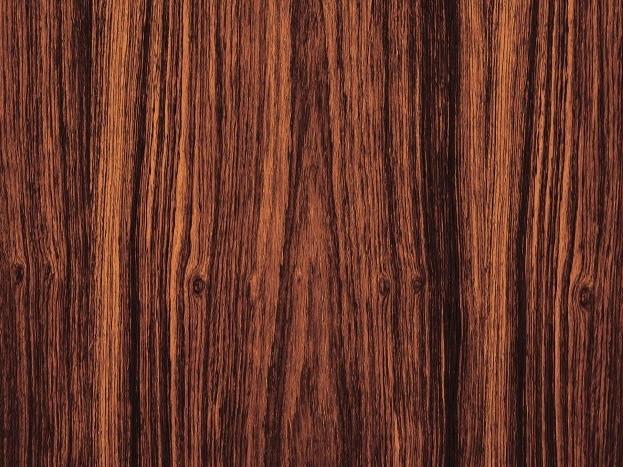
The word « rosewood » covers several species of the genus Dalbergia. Two of them are found in Scandinavian furniture. Rio rosewood (Dalbergia nigra), native to Brazil, ranges from chocolate brown to reddish or purplish brown, with contrasting dark streaks that sometimes form spider-web or landscape patterns; its yellowish sapwood is clearly separated from the heartwood. East Indian rosewood (Dalbergia latifolia) ranges from golden brown to deep purplish brown, also streaked with black, with a narrowly interlocked grain. It darkens with age to a very dark brown.
Rio rosewood was used for prestige pieces. In 2018, for example, Bruun Rasmussen offered a sideboard by Arne Vodder, made in the 1960s by P. Olsen Sibast, described as Rio rosewood. Telling the two species apart by eye nevertheless remains uncertain, especially on a patinated veneer. Laboratory analysis is possible, but it requires taking a sample and is rarely suitable for a piece of furniture.
What the regulations say
Dalbergia nigra has been listed in Appendix I of CITES, the most restrictive, since 1992. In the European Union it falls under Annex A of Regulation (EC) No 338/97. For these species, buying, selling, offering and displaying for commercial purposes are prohibited in principle. There are, however, exceptions. The first concerns « worked specimens » acquired more than fifty years before the regulation came into force, that is, before 3 March 1947. Most mid-century furniture post-dates this. The second is a certificate issued case by case by the national authority, in particular for wood acquired before protection applied. Documentary evidence is then required, which is not always possible for an old piece. In Belgium, the competent body is the CITES service of the FPS Public Health. In the example above, the piece came with a CITES certificate covering resale within the EU, and its export outside the Union remained subject to a permit.
The other Dalbergia species, including East Indian rosewood, have been listed in Appendix II of CITES since 2 January 2017, with exemptions, for example for finished products containing less than 10 kg of wood per shipment. In the EU they fall under Annex B: trade between Member States is possible where lawful acquisition can be demonstrated. These rules change from one CITES conference to the next; if in doubt about a specific piece, the competent authority remains the one to consult.
Oak and ash
Oak holds an important place in post-war Danish furniture, and Børge Mogensen used it extensively.
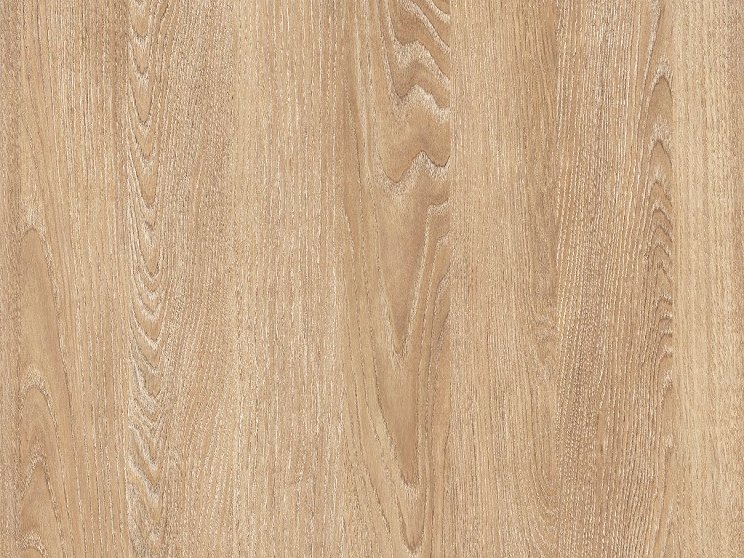
European oak has a light to medium brown heartwood, often with an olive tinge. It is a ring-porous wood: the large earlywood vessels draw clearly visible growth rings. On quarter-sawn pieces, its wide rays, visible to the naked eye, form the characteristic figure known as ray fleck.

Ash looks similar at first glance: the same medium to coarse texture, the same ring-porous structure and an almost always straight grain. Its colour ranges from beige to light brown, often with wide sapwood. The most useful difference is the absence of ray fleck, as its rays are barely visible without a magnifying glass. It steam-bends well, which makes it suited to curved parts. It is found in the work of Hans J. Wegner: the example of his Peacock chair (designed in 1947) held by Cooper Hewitt in New York combines solid ash and teak.
Birch
Birch is above all associated with Finnish design. Alvar Aalto made it one of his favourite materials: his Stool 60, presented in 1933, stands on L-shaped legs made by sawing the end of a solid birch leg along the grain, gluing thin strips of veneer into the cuts, then bending the whole with heat. Aalto patented the process the same year. Artek, founded in 1935 by Alvar and Aino Aalto, Maire Gullichsen and Nils-Gustav Hahl, has produced his birch furniture ever since. In Danish furniture, chair legs and frames are more often made of beech, a hard, even-grained wood that was readily stained to match teak or rosewood.
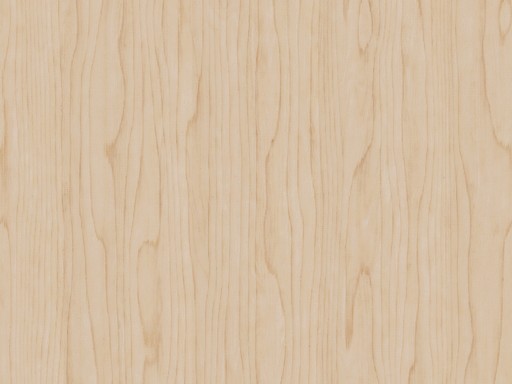
Birch is a pale wood, from creamy white to pale yellowish brown. Unlike oak and ash, it is diffuse-porous: its fine, evenly spread vessels barely mark the growth rings, and its grain stays discreet. Its surface is smooth and satiny and takes stain easily; it has in fact often been stained to imitate more expensive woods such as mahogany.
Pieces sold by Fynd Vintage are described with their finish and condition.
Sources
- The Art Newspaper, How Danish design helped shape 1950s American design culture and taste
- Royal Thai Embassy in Copenhagen, The East Asiatic Company
- Bruun Rasmussen, FDB's Popular Furniture Designer
- Bruun Rasmussen, Arne Vodder, sideboard model 29A
- Wikipedia, Finn Juhl
- Cooper Hewitt, Peacock Armchair
- The Wood Database, Teak, Brazilian Rosewood, East Indian Rosewood, English Oak, European Ash
- Council Regulation (EC) No 338/97
- Commission Regulation (EC) No 865/2006, art. 61-62
- BfN, Dalbergia nigra fact sheet
- FPS Public Health, CITES and commercial activities
- Finnish Design Shop, Aalto Stool 60
- CAMEO, Museum of Fine Arts Boston, Birch